


A roofing system is a vital component of any building’s exterior envelope, protecting physical structures, interior finishes, and occupants from severe weather. Over years of continuous exposure to sunlight, heavy rainfall, high winds, and temperature fluctuations, every roof inevitably shows signs of wear. When vulnerabilities arise, property owners face a critical financial and operational decision: whether to perform localized repairs or invest in a full roof replacement. Making the right choice requires evaluating several technical factors, including material age, structural deck integrity, the geographic extent of damage, and overall long-term lifecycle costs. Understanding these evaluation criteria allows building owners to make practical decisions that safeguard property value while managing capital expenditure.
Evaluating the Extent and Nature of Roof Damage
The first step in determining the appropriate path forward is assessing the severity and scope of the damage. Not all roof issues require tearing off the entire surface layer.
Isolated Defects versus Widespread Degradation
Minor issues that affect only a small portion of a roof deck are prime candidates for targeted repair. For instance, if high winds dislodge a few asphalt shingles or crack a single concrete tile on an otherwise sound roof, replacing those specific units restores complete weather resistance. Similarly, isolated leaks caused by dried sealant around a vent pipe or a loose section of step flashing can usually be resolved without broad intervention.
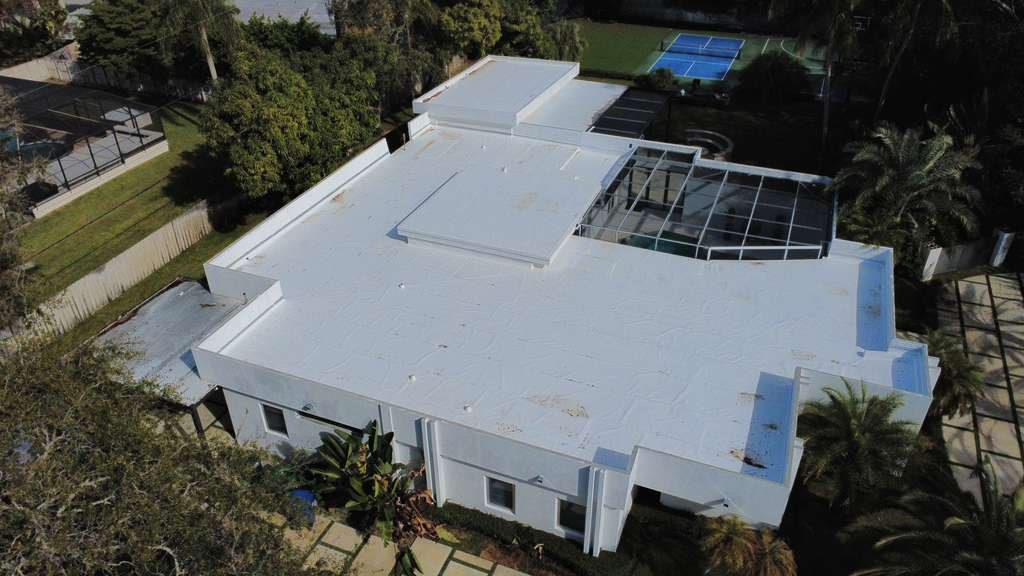
Conversely, widespread defects signal that the roofing material has reached the end of its functional life. When shingle granule loss occurs across multiple roof slopes, or when membrane shrinkage causes seam separation across large areas of a low-slope roof, localized patches offer only temporary protection. Attempting to repair a systematically failing roof often results in recurring leaks, where solving one problem area simply redirects water to another weak point.
Hidden Structural Decking and Underlayment Issues
A roof functions as an integrated assembly comprising the outer covering, secondary underlayment membranes, flashing transitions, and wooden structural decking. Water that penetrates the outer material can travel along internal rafters before manifesting as a ceiling stain. If moisture remains trapped beneath shingles or tiles for an extended period, the underlying plywood sheathing can rot, sag, or develop harmful mold. When structural decking is extensively rotted or soft underfoot, a full replacement is necessary to rebuild a solid foundation for new roofing materials.
Key Factors Influencing the Decision
Evaluating several core variables helps narrow down whether a targeted repair or a complete tear-off makes the most practical sense for a property.
Age of the Existing Roofing System
Every roofing material carries an expected operational lifespan based on its composition and manufacturing quality. Standard asphalt shingles generally last fifteen to twenty-five years, while metal, tile, and synthetic systems can endure for forty years or more. If a roof is early in its design life and suffers localized damage from a storm, executing a professional repair is typically the logical choice. However, if an asphalt shingle roof is approaching twenty years of age and exhibits curling edges, brittle tabs, or heavy granule loss, investing in repairs yields diminishing returns compared to a full replacement.
Total Cost and Financial Thresholds
A practical rule of thumb in facilities management involves comparing the cumulative cost of repeated repairs against the cost of a new roof. If the estimated expense of fixing multiple damaged sections exceeds thirty to fifty percent of the total cost for a full replacement, investing in a new roofing assembly often provides better long-term financial value. Continuous patch jobs accumulate significant labor expenses over time without resetting the roof’s operational lifespan or providing fresh warranty coverage.
Future Property Goals and Energy Efficiency
Long-term plans for the building should guide structural decisions. If a homeowner intends to list a property for sale within a few years, a complete replacement can significantly enhance curb appeal, elevate real estate valuation, and eliminate buyer inspection hurdles. Additionally, modern roofing systems incorporate advanced solar-reflective granules, improved underlayment membranes, and high-efficiency insulation boards that lower heating and cooling expenses, providing ongoing utility savings that simple surface repairs cannot deliver.
|
Evaluation Metric |
Targeted Roof Repair |
Complete Roof Replacement |
|
Primary Scope |
Isolated leaks, localized shingle loss, minor flashing gaps |
Widespread material failure, deck rot, severe storm impact |
|
Material Age |
System is in the early-to-middle phase of expected lifespan |
System is near or past its engineered service life |
|
Cost Dynamics |
Low initial cost; economical for minor fixes |
Higher upfront investment; lower long-term cost per year |
|
Structural Integrity |
Roof decking and underlayment remain dry and sound |
Decking is saturated, warped, or structurally compromised |
|
Warranty Status |
Preserves existing manufacturer coverage |
Grants brand-new material and installation warranties |
|
Energy Impact |
No change to building thermal efficiency |
Opportunity to upgrade insulation and cool-roof technology |
Common Repair Scenarios and Structural Interventions
Understanding how technicians address specific vulnerabilities helps clarify whether a problem is truly isolated or indicative of broader failure.
Addressing Flashing and Penetration Leaks
Flashing components made of galvanized steel, aluminum, or copper line the junctions where roof planes meet chimneys, dormers, and vent stacks. Because metal expands and contracts with daily temperature changes, perimeter sealants eventually crack. Resealing loose counter-flashing, replacing damaged valley metal, or slipping a new rubber boot over a vent pipe resolves moisture intrusion efficiently without disturbing the surrounding roof field.
Replacing Damaged Shingles or Tiles
When individual shingles curl or crack due to localized stress, removing the damaged units and weaving replacement shingles into the existing courses restores water tightness. However, finding an exact color match on an older roof can be challenging due to sun fading and weathering, leaving visual patches on prominent roof slopes.
When evaluating recurring leaks, material aging, or severe storm damage across a property, analyzing the financial tradeoffs of roof repair vs replacement allows building managers and homeowners to choose an approach that aligns with their immediate budget and long-term structural needs.
Long-Term Value and Maintenance Considerations
Choosing between repair and replacement ultimately shapes a building’s maintenance trajectory for years to come. A complete roof replacement resets the clock on exterior maintenance, providing brand-new manufacturer warranties that protect against material defects and high winds. It also ensures that hidden moisture trapped within attic spaces or sub-decking is fully remediated during the tear-off process.
Conversely, choosing a targeted repair makes sense when the roof structure is fundamentally healthy and the damage stems from an isolated event, such as a fallen tree branch or missing flashing fastener. Establishing a regular schedule of semi-annual inspections ensures that minor surface issues are caught early, allowing property owners to maximize the service life of their current roof before a full replacement becomes necessary.
Making an Informed Decision for Your Property
Determining whether to repair or replace a roof requires a balanced assessment of physical damage, material age, structural deck health, and financial strategy. Isolated defects on newer roofs are best handled with precise repairs, while widespread degradation on aging structures warrants a complete replacement. By evaluating key structural indicators and consulting accurate technical assessments, property owners can protect their building envelope, maintain interior comfort, and secure their long-term property investment.