


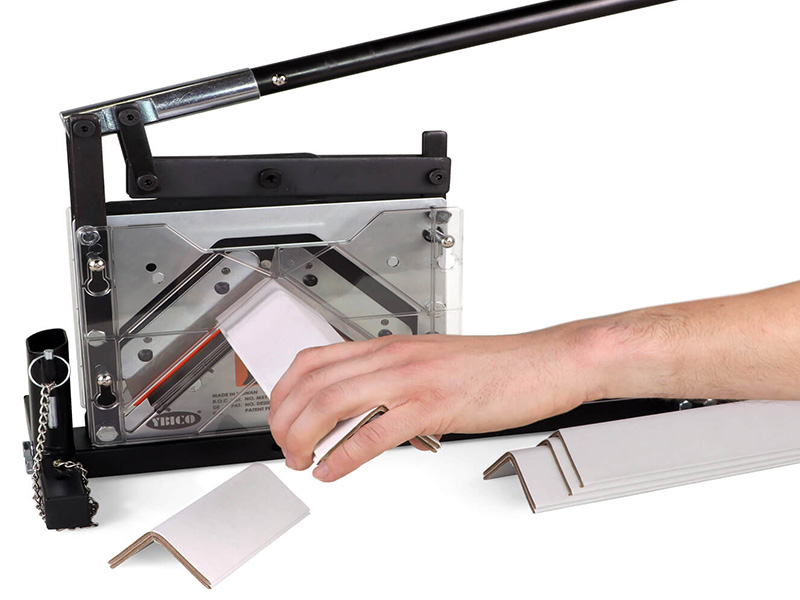
Freight damage has always been a costly issue for warehouses and shipping companies. Products move through multiple handling points before reaching customers, and every transfer creates another opportunity for something to go wrong. A pallet may be loaded correctly at the warehouse, but vibration during transportation, stacking pressure, and shifting weight can slowly weaken the shipment over time. This is one reason more businesses are turning to edge protectors and corner protectors as part of their standard packaging strategy.
The outer edges of a pallet are usually the first areas to fail during shipping. Corrugated cartons naturally weaken under pressure, especially when heavy loads are stacked on top of them. Once the corners begin collapsing, the entire pallet can become unstable. Boxes lean outward, stretch wrap loosens, and products inside the shipment become more vulnerable to damage. Using pallet edge protectors helps reinforce those weak points before problems begin.
Many warehouse managers are surprised by how much difference a simple reinforcement product can make. When protectors are applied correctly, they strengthen the overall structure of the load and help maintain its shape during transportation. Instead of having all the pressure concentrated on individual corners, the force spreads more evenly across the pallet. This creates a more stable shipping unit that holds together far better in transit.
One of the biggest advantages of pallet corner protectors is their ability to work alongside stretch wrapping systems. Stretch film alone cannot always provide enough structural support for heavier or taller loads. In some cases, excessive wrapping tension actually damages the packaging underneath by crushing the carton edges. Protectors create a rigid surface between the wrap and the cartons, allowing the load to be secured tightly without damaging the products inside.
Warehouses handling large shipping volumes often rely heavily on edge protectors because they improve consistency. Employees can wrap pallets faster and more efficiently when the load remains square and stable throughout the process. Workers spend less time adjusting collapsed boxes or rebuilding unstable pallets before shipment. Across hundreds or even thousands of daily shipments, these small efficiency improvements can save a significant amount of labor time.
Different industries benefit from pallet edge protectors in different ways. Food and beverage companies use them to prevent stacked cases from collapsing during transportation. Furniture manufacturers rely on corner protectors to reduce dents and edge damage. Retail distribution centers use them to keep pallets aligned inside trailers during long shipping routes. Industrial suppliers often depend on reinforced protectors to stabilize very heavy products that place enormous pressure on the packaging.
The growth of e-commerce has also increased the demand for stronger pallet protection systems. Online customers expect shipments to arrive in excellent condition every single time. Damaged packaging creates a poor first impression and often leads to returns or customer complaints. Businesses understand that product presentation matters almost as much as the product itself now.
A shipment with crushed corners or torn cartons may still contain an undamaged product, but customers often assume the contents were handled poorly. Because of this, many fulfillment centers have started using pallet corner protectors not only for protection but also to maintain a cleaner and more professional appearance during delivery.
Another reason businesses continue investing in corner protectors is the rising cost of freight claims. Replacing damaged products, managing returns, and reshipping orders all create expenses that add up quickly. Even a small reduction in damage rates can lead to major savings over the course of a year. Many companies discover that the cost of prevention is far lower than the cost of correcting shipping problems afterward.
Environmental conditions can also create serious challenges for pallet stability. Moisture, humidity, and temperature changes all affect corrugated packaging. In refrigerated environments, cardboard cartons often absorb moisture and lose some of their compression strength. Without reinforcement, weakened boxes are much more likely to collapse during stacking or transportation. Using pallet edge protectors helps compensate for those changing conditions by providing extra structural support.
Cold chain logistics operations depend heavily on reinforced pallets because shipments often spend long periods inside refrigerated trucks or storage facilities. The combination of moisture and stacking pressure can quickly damage unprotected cartons. Protectors help preserve the shape of the load while reducing the chances of shifting or collapse during transit.
The materials used for edge protectors have also improved significantly over the years. Recycled paperboard remains one of the most popular options because it is economical and environmentally friendly. Plastic protectors are commonly used for moisture-sensitive applications, while heavy-duty laminated versions provide additional strength for industrial shipments. Some manufacturers even create custom protectors designed specifically for oversized products or unusual pallet dimensions.
Sustainability has become another major factor influencing packaging decisions. Many companies want to reduce packaging waste without increasing product damage. Modern edge protectors often support those goals because they can be manufactured from recycled materials and recycled again after use. Some warehouses are even able to reduce overall stretch film consumption because reinforced loads remain stable with less wrapping.
Choosing the right protector is important, especially for heavier loads. Thin materials may not provide enough support for industrial shipments or tall pallet stacks. Businesses should evaluate pallet weight, transportation distance, stacking conditions, and environmental exposure before selecting a protector type. A lightweight protector that works perfectly for retail products may fail completely under the pressure of construction materials or canned beverages.
Application methods matter just as much as product quality. Some companies only place protectors on the visible front corners of the pallet, leaving other areas exposed. While partial reinforcement provides some benefit, uneven support can still allow weak points to develop during transportation. Consistent placement across all vulnerable edges usually creates the strongest results.
Warehouse automation has made pallet stability even more important than before. Conveyor systems, robotic palletizers, and automated storage systems all depend on pallets maintaining clean and consistent dimensions. Leaning cartons or crushed corners can interfere with sensors and disrupt automated workflows. Edge protectors help create more uniform load shapes that move efficiently through modern distribution systems.
Safety inside the warehouse is another major consideration. Unstable pallets create hazards for forklift operators and employees working around stacked inventory. Products that shift or fall during movement can cause injuries and equipment damage. Reinforced pallets are generally easier and safer to handle because they maintain their structure more effectively throughout storage and transportation.
International freight creates some of the harshest shipping conditions of all. Ocean containers expose pallets to vibration, humidity, compression, and repeated handling over long periods. A shipment may pass through several ports, warehouses, and transportation providers before reaching its final destination. Under those conditions, even small packaging weaknesses can quickly become serious problems.
For exporters, pallet corner protectors often become an essential part of freight preparation. Maintaining load integrity over long international routes requires stronger reinforcement than many domestic shipments. Businesses shipping overseas understand that damaged freight not only costs money but can also damage important customer relationships.
Some companies are now customizing protectors with printed branding, handling instructions, or product information. This creates a more professional appearance while also helping shipments stand out during transportation. Customization has turned edge protectors into both a functional packaging tool and a branding opportunity.
As supply chains continue evolving, businesses are under more pressure to deliver products quickly and safely while keeping operational costs under control. Packaging reinforcement may seem like a small detail, but it plays a major role in freight performance. Loads that remain stable during shipping create fewer claims, fewer returns, and happier customers overall.
Reliable edge protectors and pallet edge protectors help strengthen palletized shipments while improving warehouse efficiency and reducing preventable damage. Whether moving consumer goods, industrial equipment, or retail products, businesses that invest in strong pallet reinforcement systems are usually much better prepared for the demands of modern logistics.
Using quality corner protectors and pallet corner protectors is one of the simplest ways to improve shipment stability across the supply chain. In a shipping environment where consistency matters more than ever, small packaging improvements often produce the biggest long-term results.